

Dr Sanjay Gupta Knee Replacement Surgery: 7 Important Facts About Surgery Time
When patients consider Dr Sanjay Gupta knee replacement surgery, one of their first questions is how long the operation takes. Understanding the expected timeline can help patients prepare for surgery, hospital monitoring and rehabilitation.
Quick answer: Total knee replacement surgery commonly takes around 1–2 hours. The complete hospital process takes longer because it includes pre-operative preparation, anaesthesia and post-operative monitoring. The actual duration depends on the patient’s condition and the complexity of the procedure.
At a Glance: Knee Replacement Surgery Time
- Operation: Often around 1–2 hours for total knee replacement.
- Preparation: Includes health checks, medication review and anaesthesia assessment.
- Hospital stay: Varies with mobility, pain control, health and recovery progress.
- Recovery: Progress continues over weeks and may take several months.
1. How Long Does Total Knee Replacement Surgery Take?
For many patients, total knee replacement takes approximately one to two hours. During the operation, damaged joint surfaces are prepared and replaced with artificial components designed to support knee movement and function.
The estimated time is not identical for every patient. A primary procedure may have a different timeline from a more complex operation involving significant deformity, stiffness or previous surgery. The surgeon can provide an estimate after reviewing the patient’s examination and imaging.

2. What Happens Before Dr Sanjay Gupta knee replacement surgery?
Time at the hospital includes more than the operation itself. Before surgery, the medical team assesses the patient’s health, reviews medications and plans anaesthesia and post-operative care.
Pre-operative preparation may include:
- Medical history and physical examination.
- Blood tests and other investigations, when required.
- Knee imaging and review of joint damage.
- Anaesthesia assessment.
- Medication review and instructions about medicines.
- Guidance about food and fluids before surgery.
- Discussion of expected risks, benefits and rehabilitation.
Patients should follow the instructions given by their own medical team. Do not stop or change prescribed medicines without professional advice.
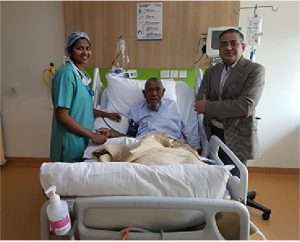
3. How Is Dr Sanjay Gupta knee replacement surgery Performed?
Total knee replacement generally involves several steps. The exact technique depends on the patient’s anatomy, diagnosis and surgical plan.
- Appropriate anaesthesia is administered.
- The surgical area is prepared.
- The surgeon accesses the knee joint.
- Damaged bone and cartilage surfaces are prepared.
- The replacement components are positioned.
- Knee movement and stability are checked.
- The surgical wound is closed and post-operative care begins.
The purpose is to address damaged joint surfaces and improve pain and function where knee replacement is clinically appropriate. Individual results vary, and the procedure carries risks that should be discussed with the surgeon.
4. What Factors Affect Knee Replacement Surgery Time?
Not every knee replacement takes the same amount of time. Factors that can influence the surgical timeline include:
- Joint damage: The extent of damage can affect surgical planning.
- Knee anatomy: Individual bone structure and alignment matter.
- Previous surgery: Earlier procedures can make some operations more complex.
- Type of replacement: Partial and total replacements have different requirements.
- Stiffness or deformity: Additional surgical steps may be needed in some cases.
- Clinical circumstances: The patient’s health and the planned surgical approach may influence timing.
For these reasons, a general time range should not be treated as a guarantee. The treating surgeon is best placed to estimate the duration for an individual patient.
5. Can Dr Sanjay Gupta knee replacement surgery Use Robotic Assistance?
Robotic-assisted knee replacement uses technology to support surgical planning and guide certain parts of the procedure. The surgeon remains responsible for clinical decisions and performing the operation.
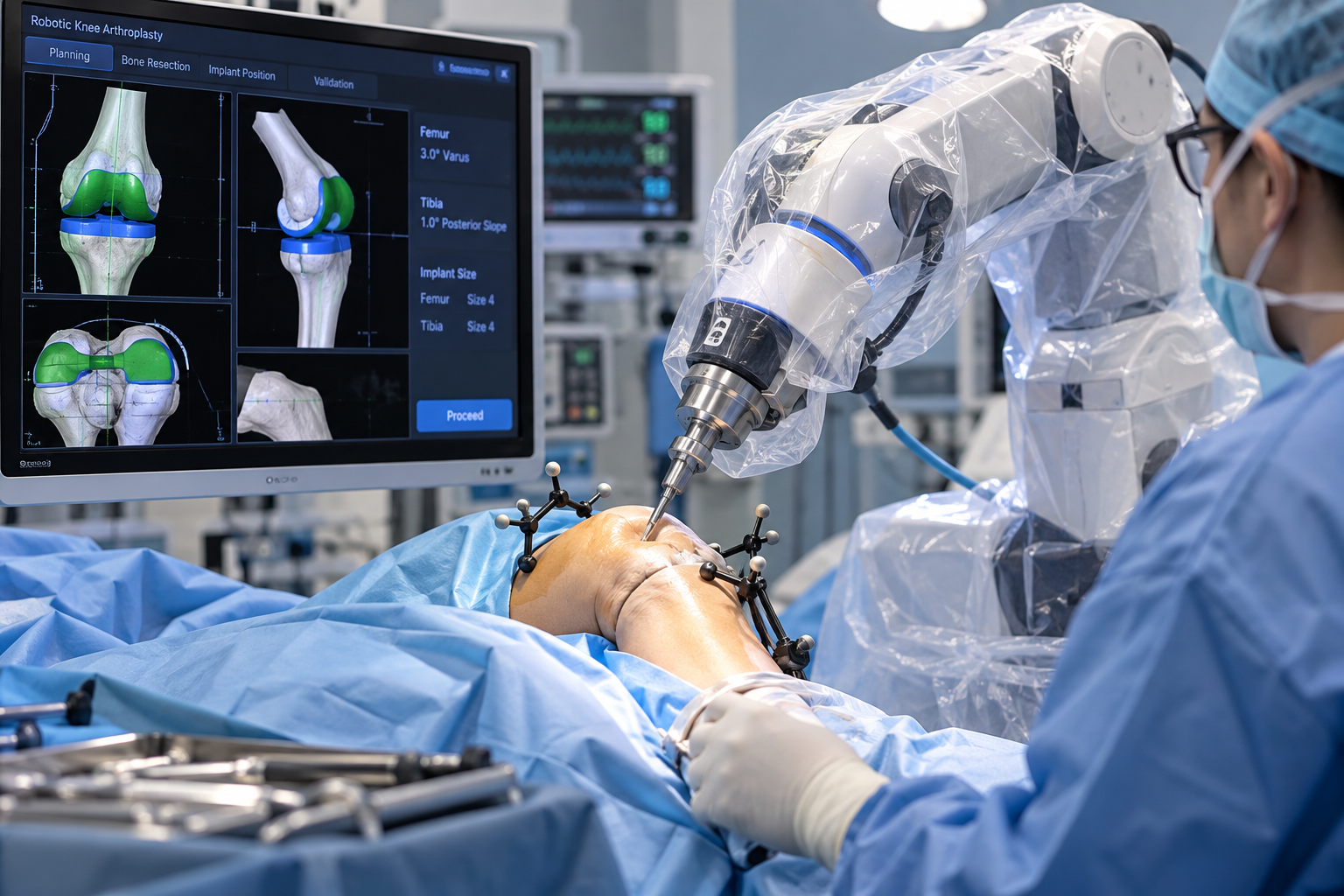
Whether robotic assistance is suitable depends on the patient’s condition, the technology available and the surgeon’s assessment. It does not automatically mean a shorter operation or guarantee a better outcome for every patient. Ask about the expected benefits, limitations and costs before deciding.
Related knee replacement information
Knee Replacement Surgery
Learn about the procedure and treatment considerations.
Total Knee Replacement in Noida, Vaishali & Ghaziabad
Explore regional treatment information and consultation options.
6. How Long Is the Hospital Stay After Knee Replacement?
Patients generally remain under medical observation after surgery. The length of the hospital stay depends on pain control, mobility, general health, the support available at home and the treating team’s discharge criteria.
Before discharge, the care team assesses recovery and explains wound care, medication, mobility support and follow-up. Some patients may leave sooner than others; there is no single hospital-stay duration that applies to everyone.
Patients should ask their care team when they can safely stand, walk with assistance, use stairs if necessary and return home.
7. How Long Does Recovery Take After Knee Replacement?
Recovery continues well beyond the operation. Many patients start moving and walking with assistance soon after surgery when the medical team considers it safe. Physiotherapy and prescribed exercises help restore strength, mobility and confidence.
People often make progress over the first several weeks, but full recovery can take several months or longer. The timeline depends on general health, muscle strength, pre-operative mobility, complications and participation in rehabilitation.
Follow the personalised exercise and activity plan provided by your surgeon and physiotherapist. Seek medical advice if you develop concerning symptoms or your recovery does not progress as expected.
How Long Can a Knee Replacement Last?
A knee replacement is intended to provide long-term improvement in pain and function, but an implant does not last the same amount of time for every patient. The NHS notes that many knee replacements can last around 25 years, although individual outcomes vary.
What Should You Ask at Your Consultation?
Before deciding on treatment, consider asking your orthopaedic surgeon:
- Why is knee replacement being recommended in my case?
- Which type of replacement is suitable for me?
- How long is my expected operation?
- Would robotic assistance be appropriate for my condition?
- How long might I stay in hospital?
- When can I begin walking and physiotherapy?
- What should I expect during recovery?
- What risks, alternatives and costs should I understand?
Frequently Asked Questions
How long does knee replacement surgery take?
Total knee replacement commonly takes around 1–2 hours. Preparation and post-operative monitoring add to the overall time at the hospital.
Does robotic knee replacement take longer?
The effect on operating time depends on the technology, the surgical plan and the individual case. Ask the surgeon about the expected timeline for your procedure.
How soon can I walk after knee replacement?
Many patients begin walking with assistance soon after surgery, when their condition and care team’s advice allow it.
How long does recovery take?
Recovery varies. Improvement often continues over several weeks, while full recovery may take several months or longer.
Will every patient need robotic-assisted surgery?
No. Suitability depends on the patient’s diagnosis, anatomy, treatment goals and the surgeon’s assessment.
Book a Knee Replacement Consultation in Noida
Patients considering treatment can arrange a consultation to discuss their symptoms, diagnosis, treatment choices, expected operation time and rehabilitation plan.
SG Clinic – Noida
3D-5L, Wave City Centre, Sector 32, Noida – 201301
Phone: +91 88263 18986
Email: sanjaigupta06@gmail.com
Conclusion
Knee replacement surgery commonly takes around one to two hours, but preparation, monitoring and rehabilitation are also important parts of treatment. The actual timeline varies with the patient’s health and the complexity of the procedure.
If you are considering Dr Sanjay Gupta knee replacement surgery, discuss your expected operation time, treatment options, hospital stay and recovery plan during a clinical consultation. A personalised assessment is the best way to understand what may apply to your situation.
Medical information notice: This article is for general educational purposes and does not replace individual medical advice. Treatment decisions should be made with a qualified healthcare professional.

