

Medically Reviewed
Dr. Sanjay Gupta
Orthopaedic & Joint Replacement Surgeon
Knee Replacement Recovery: 7 Essential Week-by-Week Milestones
Knee replacement recovery is a gradual process that involves pain management, physiotherapy, walking practice, strengthening exercises and a progressive return to everyday activities. While many patients become more mobile within the first few weeks, complete recovery can take several months and varies from person to person.
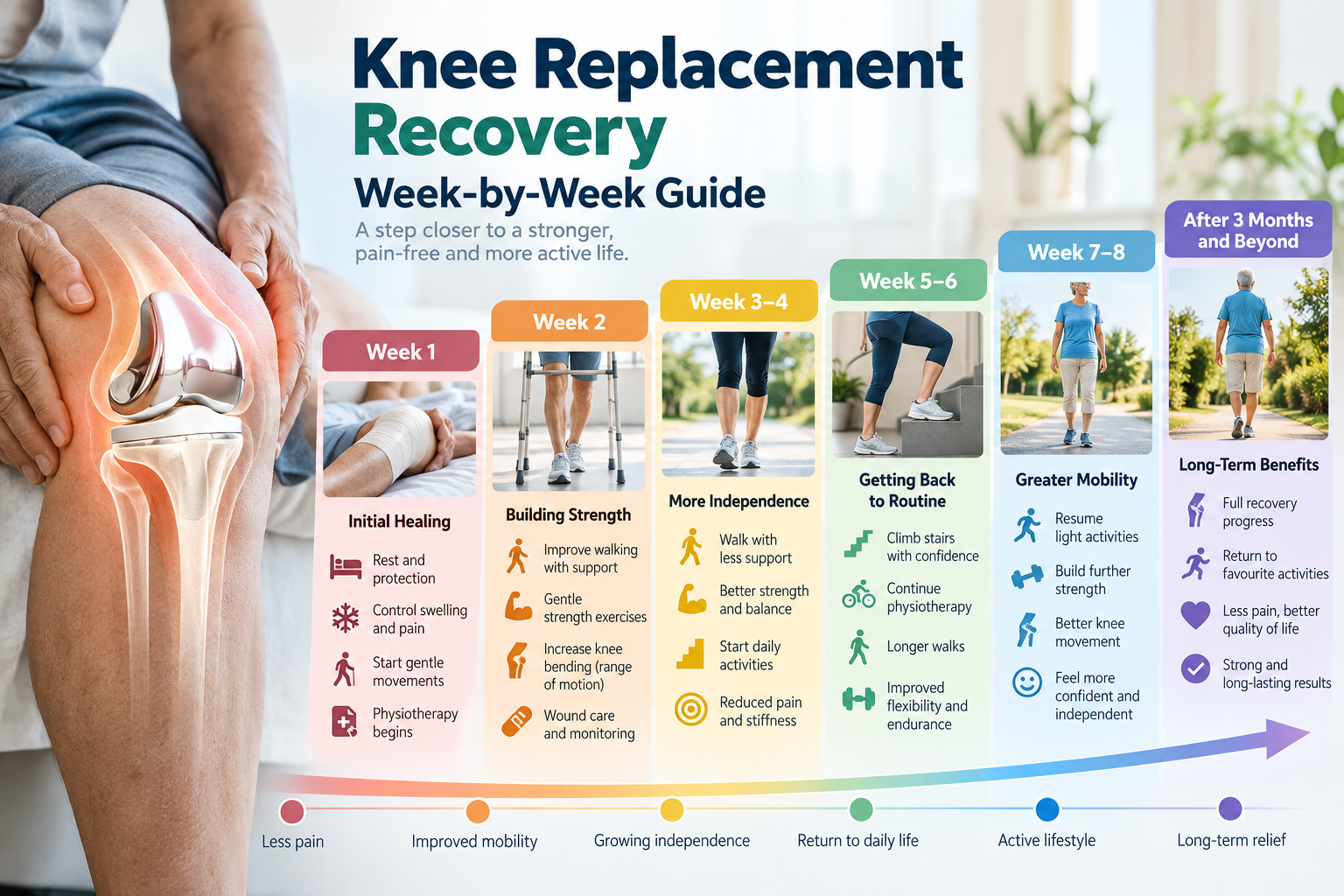
Quick Answer: How Long Does Knee Replacement Recovery Take?
Most patients progress through several stages after knee replacement surgery. Walking with assistance usually begins soon after surgery, followed by gradual improvement in movement, strength and independence. Many patients become increasingly independent during the first 4–6 weeks, but swelling, stiffness and muscle weakness may continue for several months.
1. Knee Replacement Recovery: What to Expect Overall
Recovery after knee replacement surgery does not happen overnight. The first few days focus on getting out of bed safely, controlling pain and swelling, beginning exercises and learning to walk with appropriate support.
During the following weeks, the focus gradually shifts towards improving knee movement, rebuilding leg strength and becoming more independent with daily activities. Your exact recovery timeline depends on factors such as your age, general health, muscle strength before surgery, the type of surgery performed and how consistently you follow your rehabilitation programme.
It is important to remember that a recovery timeline is a guide rather than a fixed deadline. Your surgeon and physiotherapist can modify exercises and activity levels according to your individual progress.
2. Week 1: Getting Moving Safely
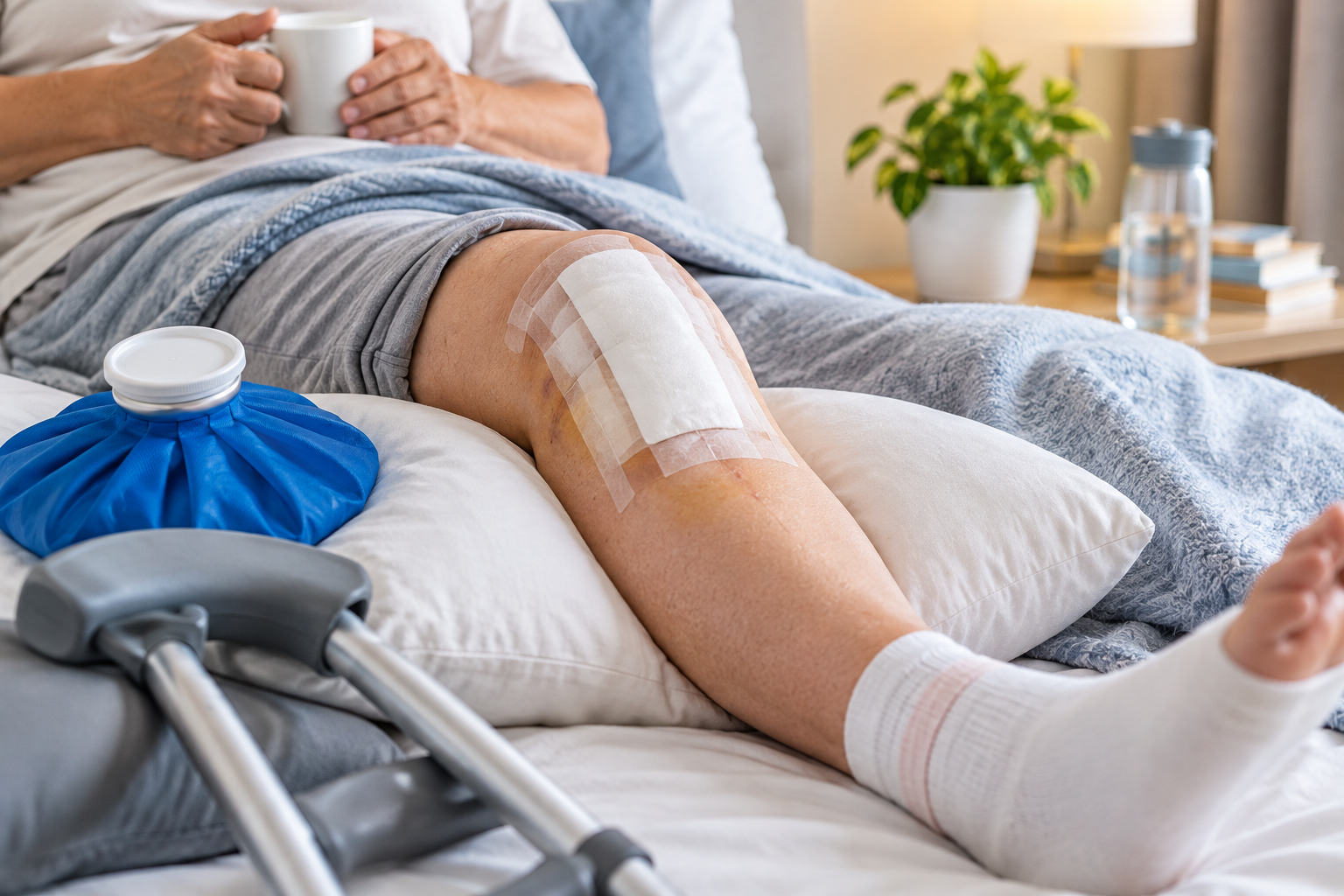
The first week is usually focused on safe mobility and establishing the foundation for rehabilitation. Physiotherapy may begin very soon after surgery, with exercises designed to improve circulation, knee movement and muscle activation.
- Begin walking with a walker or other recommended walking aid.
- Perform prescribed knee and leg exercises regularly.
- Work on gradually improving knee bending and straightening.
- Keep the operated leg elevated when advised to help manage swelling.
- Follow your surgeon’s instructions for wound care and medication.
- Avoid sudden twisting or movements that place unnecessary stress on the knee.
Short, frequent periods of activity are generally more manageable than trying to remain active for a long period at once. Pain and swelling are expected during this stage, but your rehabilitation team should guide you on what is appropriate.
3. Week 2: Building Confidence With Walking
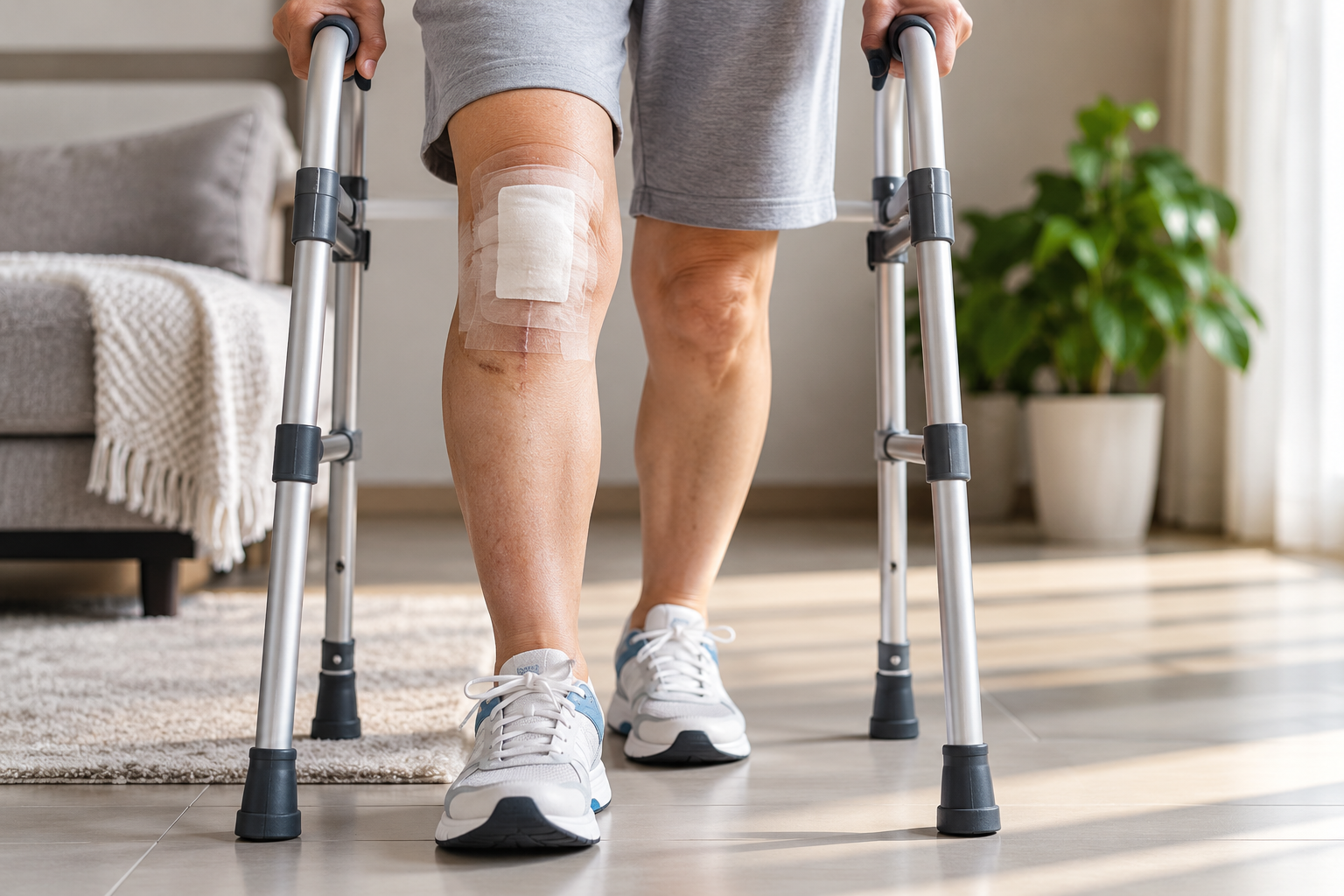
During the second week, many patients start feeling more confident with basic movement. Walking remains an important part of recovery, but it should be increased gradually rather than rushed.
Physiotherapy continues to focus on knee mobility and strengthening. Your physiotherapist may gradually progress exercises depending on your movement, strength and pain levels.
Walking
Continue using the recommended walking aid and increase distance gradually.
Exercises
Continue prescribed exercises consistently rather than exercising aggressively.
Swelling
Swelling may still be noticeable, particularly after activity.
4. Weeks 3–4: Improving Knee Movement and Strength
By weeks three and four, rehabilitation generally becomes more focused on improving strength, balance and functional movement. You may be able to walk farther and perform more everyday activities, depending on your individual progress.
At this stage, consistency is more important than trying to achieve rapid results. Continue the exercises recommended by your physiotherapist and increase activity gradually.
You may also notice that some activities are becoming easier, although the knee may still feel stiff or swollen after exercise or longer periods of activity.
5. Weeks 5–6: Becoming More Independent
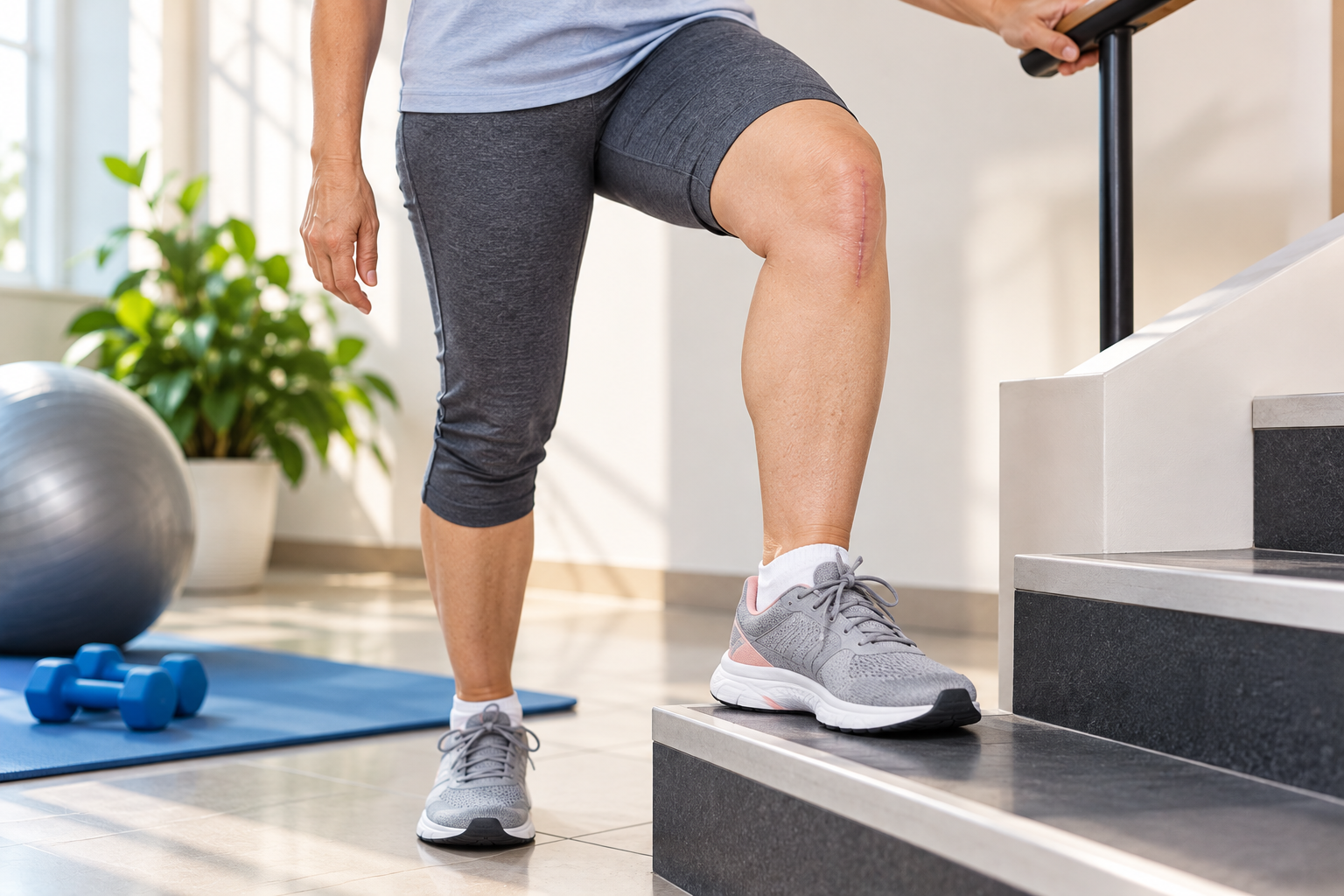
Around weeks five and six, many patients are able to perform more everyday activities with greater confidence. Depending on recovery and clinical assessment, some patients may begin reducing their reliance on walking aids.
This does not mean that the knee is completely healed. Internal tissues and surrounding muscles are still recovering, and swelling may continue. Your surgeon or physiotherapist should determine when it is appropriate to progress activity or reduce walking support.
Driving should also be discussed with your surgeon. NHS guidance notes that returning to driving after total knee replacement is commonly considered around six weeks, but the exact timing depends on recovery and whether you can safely control the vehicle.
For additional patient information, see the NHS guidance on knee replacement recovery.
6. After 6 Weeks: Continuing the Recovery Journey
Reaching six weeks does not necessarily mean that knee replacement recovery is finished. Instead, it is often a point at which many patients can gradually increase their activities while continuing rehabilitation.
Strengthening the muscles around the knee remains important. Walking, prescribed exercises and other suitable low-impact activities can help improve function over time.
Your surgeon may review your progress and assess knee movement, pain, swelling and overall function. Activity recommendations should be based on your individual examination rather than a calendar date alone.
7. Managing Swelling During Knee Replacement Recovery
Swelling is common after knee replacement surgery and can continue for months. It may become more noticeable after walking or exercising.
Strategies such as elevating the leg, following your prescribed exercise programme and gradually increasing activity can help manage symptoms. However, a sudden increase in swelling, particularly when accompanied by significant pain, redness, warmth or other concerning symptoms, should be discussed with your medical team.
Physiotherapy: A Key Part of Knee Replacement Recovery
Physiotherapy plays an important role in recovery after knee replacement. Rehabilitation generally includes exercises aimed at improving knee movement, strengthening the muscles around the knee and restoring functional mobility.
The American Academy of Orthopaedic Surgeons provides additional information about exercise and rehabilitation following knee replacement. You can review the AAOS Total Knee Replacement Exercise Guide for general educational information.
Exercises should be performed according to your surgeon’s or physiotherapist’s instructions. Increasing exercise too quickly can cause unnecessary pain and swelling, so rehabilitation should progress gradually.
Returning to Normal Activities After Knee Replacement
The timing for returning to everyday activities varies from patient to patient. The following table provides a general framework rather than a fixed schedule.
| Activity | General Recovery Stage | Important Consideration |
|---|---|---|
| Walking | Begins soon after surgery | Increase distance gradually |
| Walking without support | Often progresses during the first several weeks | Only when clinically appropriate |
| Driving | Often around 6 weeks | Confirm with your surgeon and insurer |
| Work | Depends on occupation and recovery | Desk work may differ from physically demanding work |
| Exercise | Progressively increased | Prefer activities approved by your medical team |
What to Do and Avoid During Knee Replacement Recovery
Do
- Follow your prescribed rehabilitation programme.
- Walk regularly as advised.
- Perform exercises consistently.
- Use walking aids correctly.
- Attend scheduled follow-up appointments.
- Increase activity gradually.
Avoid
- Sudden increases in activity.
- Unnecessary twisting of the operated knee.
- Ignoring significant or worsening pain.
- Stopping physiotherapy without medical advice.
- Returning to demanding activities too quickly.
- Comparing your recovery rigidly with someone else’s.
When Should You Contact Your Doctor?
Some pain, swelling and stiffness are expected during recovery. However, patients should seek medical advice if they develop symptoms that are unusual, severe or getting worse.
- Increasing or severe pain that is not improving.
- Sudden or significant swelling.
- Increasing redness or warmth around the wound.
- Fluid or discharge from the surgical wound.
- Fever or feeling significantly unwell.
- New calf pain or swelling.
- Breathing difficulty or chest pain requiring urgent medical attention.
Knee Replacement Recovery With Dr. Sanjay Gupta
Dr. Sanjay Gupta provides orthopaedic and joint replacement care, including evaluation and treatment for patients considering knee replacement surgery. Recovery planning is tailored according to the patient’s condition, surgical procedure, mobility and rehabilitation needs.
If you are researching knee replacement surgery, you can also explore:
Frequently Asked Questions About Knee Replacement Recovery
How long does knee replacement recovery take?
Recovery is gradual. Many patients make significant functional progress during the first 4–6 weeks, but complete recovery can take several months. The exact timeline varies depending on individual health, strength, rehabilitation and the type of surgery.
When can I walk after knee replacement?
Walking is usually started soon after surgery with assistance from the medical and physiotherapy team. A walker or other walking aid may be required initially, with support reduced as strength and balance improve.
Is swelling normal after knee replacement?
Yes. Swelling is common following knee replacement and can persist for an extended period. It generally improves gradually, although activity can temporarily increase swelling.
When can I drive after knee replacement?
Driving is commonly considered around six weeks after total knee replacement, but there is no universal date. You should only return to driving after discussing it with your surgeon and when you can safely control the vehicle.
Can I exercise after knee replacement?
Exercise is an important part of rehabilitation, but the type and intensity should progress gradually. Your physiotherapist or surgeon can recommend appropriate exercises based on your recovery.
Why is physiotherapy important after knee replacement?
Physiotherapy helps restore knee movement, improve muscle strength and rebuild functional mobility. Following the prescribed rehabilitation programme consistently can support the recovery process.
Planning Knee Replacement Surgery?
Understanding the recovery process can help you prepare for life after surgery. If you are considering knee replacement or want to understand whether surgery may be appropriate for your condition, consult an orthopaedic and joint replacement specialist for an individual assessment.
📍 3D-5L, Wave City Centre, Sector 32, Noida, Uttar Pradesh
📞 +91 8826318986 | +91 7303804513
📧 sanjaigupta06@gmail.com
Conclusion
Knee replacement recovery is a step-by-step process rather than a single event. The first weeks generally focus on safe walking, pain and swelling management and physiotherapy, while the following weeks focus on improving strength, movement and independence.
A week-by-week recovery guide can help you understand what to expect, but your own recovery timeline may be different. Following your surgeon’s instructions, staying consistent with rehabilitation and progressing activity gradually are important parts of a safe recovery.
Medical Review: Dr. Sanjay Gupta, Orthopaedic & Joint Replacement Surgeon.
This article is intended for general educational purposes and should not replace personalised medical advice, diagnosis or treatment from a qualified healthcare professional.

