

Why Some Patients Still Have Pain After Knee Replacement: Causes, Warning Signs and What Can Be Done
Why some patients still have pain after knee replacement is one of the most frustrating questions in joint surgery. You accepted an operation to end your pain, you worked hard on your exercises, and the knee still hurts. It is natural to feel worried, and even to wonder whether the surgery failed.
The good news is that pain after knee replacement has a cause in most cases, and many causes can be treated. This guide explains what is normal, the real reasons behind persistent pain after knee replacement, the patterns doctors look for, and when to worry. It follows the practical approach of Dr. Sanjay Gupta, an orthopaedic surgeon in Noida with about 25 years of experience in knee and hip replacement.
Quick Answer
Is it normal to have pain after knee replacement?
Some pain and swelling are normal for several months, and a dull ache can last up to a year. Beyond that, roughly one in ten to one in five patients in various studies report ongoing pain. Why some patients still have pain after knee replacement usually comes down to stiffness, an unbalanced or poorly positioned knee, infection, pain coming from the hip or spine, nerve irritation, or pain sensitivity that was present before surgery. Persistent pain should be investigated, not just tolerated.
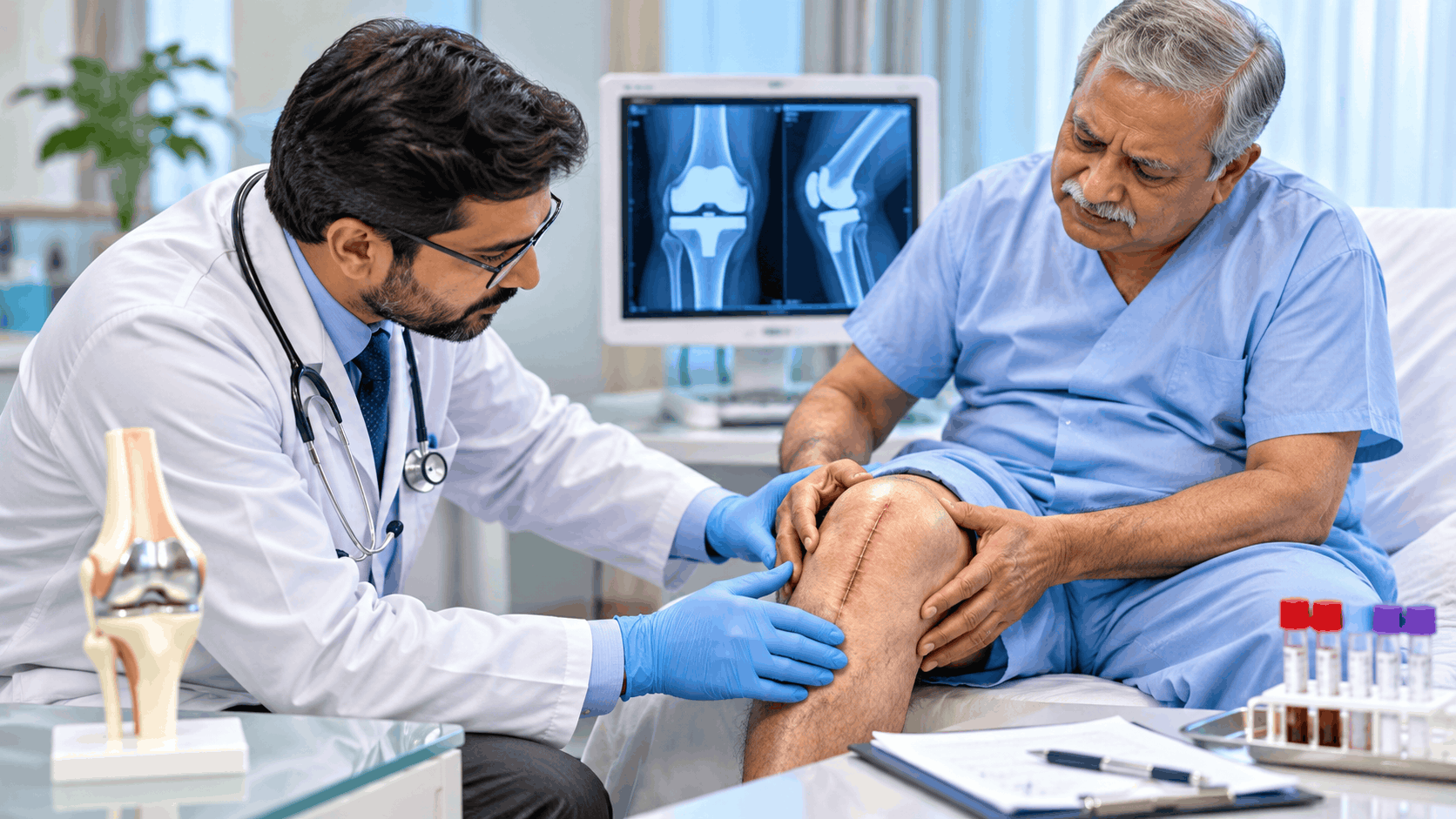
What Is Normal Pain After Knee Replacement, and What Is Not?
Before looking for a problem, it helps to know what ordinary healing feels like. The knee is cut, reshaped and fitted with a new joint, so soreness is expected. The table below is a general guide. Your own surgeon’s advice comes first, and our knee replacement recovery timeline covers each stage in more detail.
| Time after surgery | Usually normal | Worth checking |
|---|---|---|
| First 6 weeks | Pain on moving, swelling, bruising, night discomfort | Fever, a wound that leaks or opens, pain that rapidly worsens, calf swelling |
| 6 to 12 weeks | Pain easing, tightness after exercise, a warm knee | A bend or straightening that is not improving, pain at rest that is not settling |
| 3 to 6 months | Occasional ache, swelling after a long day, numb patch beside the scar | Pain that is the same or worse than at 6 weeks, giving way, burning pain |
| 6 to 12 months | Mild ache with heavy activity or weather changes | Daily pain that limits walking, stairs or sleep |
| After 1 year | Little or no pain in daily life | Any persistent pain, or new pain after a pain-free period |
A numb patch on the outer side of the scar is very common because small skin nerves are cut during surgery. It is usually harmless, though it can take months to shrink.
Why Some Patients Still Have Pain After Knee Replacement: The Main Reasons
The causes fall into three groups: problems inside the knee, problems around it, and problems in how the body processes pain.
1. Problems Inside the Knee
- Stiffness and scar tissue: excess scar tissue can form inside the joint and limit movement. Stiffness after knee replacement is one of the most common reasons for ongoing pain, and one of the most treatable if caught early.
- An unbalanced or unstable knee: if the ligaments are too tight or too loose, the knee can feel painful, swollen or ready to give way.
- Implant position and size: an implant that is slightly rotated, too large or poorly aligned can irritate soft tissue and the kneecap. Accurate planning matters, and you can read about it on our page for the best robotic knee replacement surgeon in Noida. Even so, no technology guarantees a pain-free result.
- Kneecap problems: pain at the front of the knee when climbing stairs or standing from a chair can come from how the kneecap tracks.
- Infection: a deep infection does not always cause fever. It can show up as constant pain, warmth, stiffness or a wound that heals poorly. Good blood sugar control before surgery lowers the risk, which is why our guide on knee replacement for diabetic patients stresses preparation.
- Loosening or wear: an implant can slowly loosen from the bone, usually causing pain on first steps or with weight bearing. This is less common in the first years.
2. Problems Around the Knee
- Pain from the hip or lower back: hip arthritis or a pinched nerve in the spine can be felt in the knee. The knee implant can be perfect and the pain still continues.
- Tendon and bursa irritation: inflamed soft tissue on the inner or outer side of the knee can cause sharp, localised pain.
- Nerve irritation: burning, tingling or electric pain can come from small nerves around the scar.
- Blood clot: calf pain and swelling can signal a clot and needs prompt attention.
- A fracture after a fall: a broken bone near the implant can happen after even a minor fall.
- Strain from walking aids: a walker or stick can overload the shoulder and wrist. If you have shoulder pain, such as from a rotator cuff problem, tell your surgeon and physiotherapist.
3. Pain Sensitivity and Expectations
This group is often overlooked. Understanding why some patients still have pain after knee replacement also means looking at the period before surgery. Some people have had severe knee pain for years, and the nervous system can become over-sensitive, so it continues to signal pain even after the damaged joint is replaced. Anxiety, poor sleep, depression and other long-term pain conditions can make this more likely.
Surgery done for only mild arthritis may also leave patients disappointed, because there was less pain to remove. If you are still deciding, read about the non-surgical options for knee pain first. Finally, expectations count. Many patients expect to squat, sit cross-legged or kneel as before, and a knee that cannot do so can feel like a failed operation even when it works well.
Matching the Pattern of Pain to the Likely Cause
Doctors pay close attention to how the pain behaves when working out why some patients still have pain after knee replacement. This table shows the patterns they think about. It is a guide to the conversation with your surgeon, not a way to diagnose yourself.
| How the pain behaves | Possible cause | Typical check |
|---|---|---|
| Tight, stuck knee that will not bend or straighten | Stiffness and scar tissue | Measuring range of motion, physiotherapy review |
| Constant pain, warmth, worse at rest and at night | Infection or inflammation | Blood tests, joint fluid test |
| Pain on first steps or on weight bearing | Implant loosening | Standing X-rays, sometimes bone scan or CT |
| Giving way, swelling that returns | Instability or imbalance | Stability tests, stress X-rays |
| Front-of-knee pain on stairs or rising from a chair | Kneecap tracking or muscle weakness | Kneecap X-ray view, strength assessment |
| Burning, tingling, touch-sensitive skin | Nerve irritation | Clinical examination, sometimes a diagnostic nerve block |
| Pain in thigh or groin, linked to back movement | Hip or spine origin | Hip and spine examination, imaging if needed |
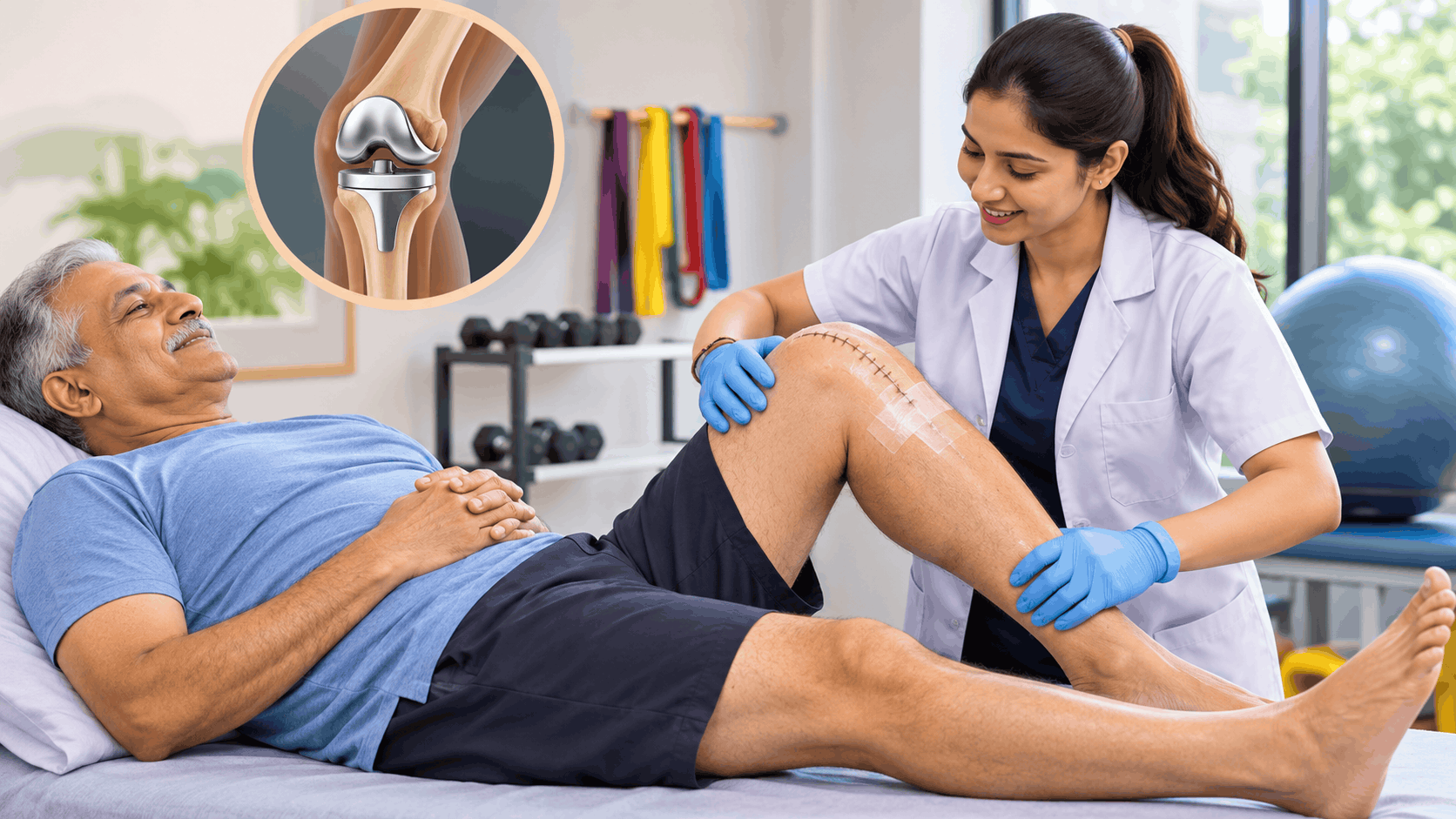
Stiffness After Knee Replacement: The Most Fixable Cause
Stiffness is one clear answer to why some patients still have pain after knee replacement, and it matters because the first few months are a window of opportunity. If the knee is not bending or straightening as planned, scar tissue can set in. Telling your surgeon early gives more options, including more intensive physiotherapy, and in selected cases a manipulation under anaesthesia within the first few months. Waiting until the stiffness is long-standing makes it harder to improve.
Do not skip physiotherapy because of pain, and do not push through sharp pain either. You can watch how typical exercises are done in the video gallery, but let your own physiotherapist check your technique.
When to Worry About Pain After Knee Replacement
Seek emergency care for:
- Chest pain or sudden breathlessness
- A hot, red, very swollen knee with fever
- A new swelling, pain or redness in the calf
- Inability to bear weight after a fall
Call your surgeon within a few days if:
- Pain is not improving, or is worse, compared with a month ago
- The wound is leaking or not healing
- The knee feels unstable or gives way
- Your range of motion is going backwards
- New pain begins after a period of feeling well, even years later
How Doctors Find Out Why Some Patients Still Have Pain After Knee Replacement
A sound evaluation moves in a logical order. Your surgeon is likely to:
- Listen carefully: when the pain began, how it behaves, what makes it better or worse and what you have taken for it.
- Examine the knee, hip and spine: checking movement, stability, the kneecap, tender spots and nerve signs.
- Order X-rays: standing views show the implant position and signs of loosening.
- Check for infection: blood tests, and sometimes a sample of joint fluid.
- Use extra imaging only when needed: a CT scan or bone scan can answer specific questions.
This step matters more than any other. When no mechanical problem is found, repeating the operation, which is called revision surgery, usually does not relieve the pain. Treatment is then aimed at the real source, such as a nerve, the hip, the spine or the pain pathway, instead of the implant.
What You Can Do While You Wait for Answers
- Keep moving in short, regular bouts rather than long rests or long walks.
- Control swelling with elevation and cold packs after exercise.
- Use only the medicines your doctor advised. Long-term painkillers from a chemist can harm the stomach and kidneys and hide a problem that needs a diagnosis.
- Protect your sleep. A pillow under the calf, not the knee, and a regular bedtime help pain tolerance.
- Avoid deep squatting and floor sitting until your surgeon allows it.
- Write a short pain diary: pain score, walking distance, sleep and what triggers pain. It gives your surgeon facts, not guesses.
- Look after your mood. Worry and low mood increase pain. Tell your doctor if you feel anxious or low.
Getting a Second Opinion After Knee Replacement
A second opinion is reasonable if no one has yet explained why some patients still have pain after knee replacement in your own case, if your pain has no explanation, if you were told it is “just something to live with” without tests, or if your trust in the first team has gone. It does not offend a good surgeon, and a good surgeon will not take offence.
Bring your discharge summary, the operation notes, the implant sticker or card, all X-rays and scans, and a list of treatments you have tried. If you live in East Delhi, you can also see the page for the best orthopaedic doctor in East Delhi. Consultations are held at SG Clinic, Wave City Centre, Sector 32, Noida, and you can learn about the surgeon’s training on the about Dr. Sanjay Gupta page.
Hearing from others can be reassuring too. You can read patient testimonials, look through the photo gallery and browse the media gallery to see the clinic and the team.
Conclusion: Why Some Patients Still Have Pain After Knee Replacement
The reason why some patients still have pain after knee replacement is rarely a single mystery. It may be stiffness, an unbalanced knee, an infection, pain from the hip or spine, a sensitive nerve or a nervous system that learned to hurt over many years. Each of these can be investigated and most can be treated. Do not accept lasting pain as normal, and do not rush into another operation without a clear cause. If your knee still hurts, contact the clinic to book a consultation and get your answers.
This article is for general information and is not a substitute for personal medical advice.
Frequently Asked Questions
Is it normal to still have pain one year after knee replacement?
A mild ache with heavy activity can be normal, but daily pain at one year is not something to accept without assessment. The reasons why some patients still have pain after knee replacement include stiffness, instability, infection, nerve irritation and pain from the hip or spine.
What causes persistent pain after knee replacement?
Common causes are stiffness and scar tissue, an unbalanced or poorly aligned implant, loosening, infection, nerve irritation, kneecap problems and pain referred from the hip or back. Sometimes long-standing pain sensitivity before surgery plays a role.
When to worry about pain after knee replacement?
Worry if pain is getting worse or not improving over weeks, or if you have fever, a hot swollen knee, a leaking wound, calf swelling or giving way. Chest pain and breathlessness need emergency care.
Can an X-ray be normal and the knee still painful?
Yes. Infection, stiffness, tendon irritation, nerve pain and referred pain often do not show on a plain X-ray. Your surgeon may add blood tests, a joint fluid test or other scans.
Does stiffness after knee replacement cause pain?
Yes. A knee that cannot bend or straighten properly strains the muscles and the joint lining, which causes pain and affects walking. Telling your surgeon early gives more treatment options.
Will I need another operation if my knee still hurts?
Not necessarily. Many causes are treated with physiotherapy, medicines or procedures that are not major surgery. Revision surgery is considered only when tests show a mechanical problem that surgery can fix.
Can infection cause pain years after knee replacement?
Yes, although it is uncommon. A new, persistent pain after a long pain-free period should be checked, especially with warmth, swelling or recent infections elsewhere, such as dental or urinary infections.
Should I get a second opinion about pain after knee replacement?
It is reasonable if your pain has no clear explanation or you have not had a full evaluation. Bring your operation notes, implant details, scans and a record of the treatments you have tried.
SG Clinic – Noida
📍 3D-5L, Wave City Centre, Sector 32, Noida – 201301

