

Advantages and Disadvantages of Robotic Knee Replacement
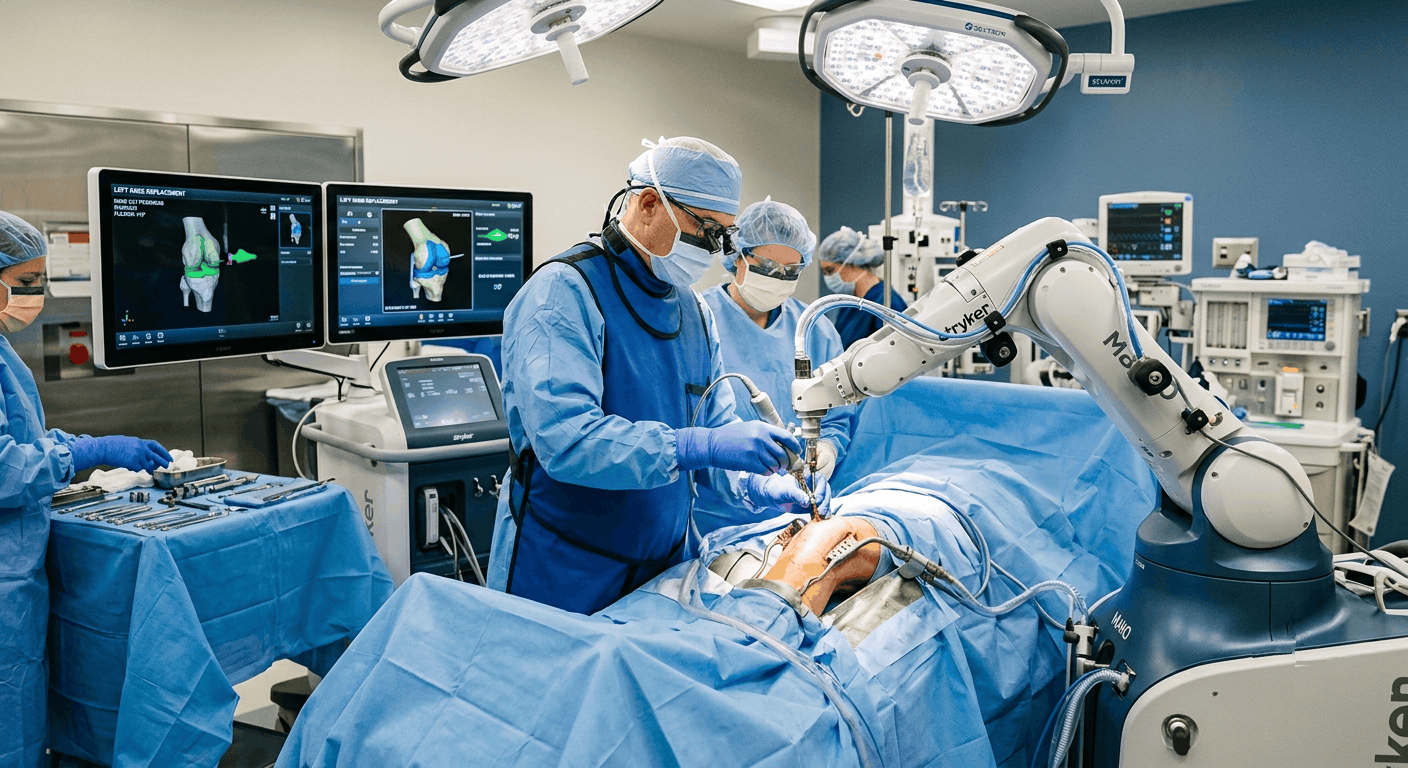
Robotic knee replacement has become an increasingly discussed option for people with severe knee arthritis and other conditions requiring knee replacement surgery. The technology can help an orthopaedic surgeon plan the operation, assess the patient’s anatomy and improve the accuracy of implant positioning.
However, robotic knee replacement is not automatically better for every patient. It can involve higher costs, limited availability, additional technology requirements and sometimes a longer operating time. Most importantly, the robot assists the surgeon; it does not independently perform the operation.
Understanding the advantages and disadvantages of robotic knee replacement can help patients have a more informed discussion with their orthopaedic surgeon before choosing between robotic-assisted and conventional knee replacement. Before considering surgery, patients should also understand when knee replacement may actually be needed and whether non-surgical treatment remains appropriate.
What Is Robotic Knee Replacement?
Robotic knee replacement is a form of knee replacement surgery in which computer-assisted and robotic technology helps the orthopaedic surgeon plan and perform specific parts of the procedure.
Depending on the robotic platform being used, the process may involve detailed preoperative imaging or intraoperative mapping of the patient’s knee. The system helps the surgeon understand the patient’s anatomy and plan factors such as bone preparation, implant position and alignment.
The surgeon remains responsible for the operation and makes the clinical decisions throughout the procedure. The robotic system is an assistive technology rather than an autonomous surgeon.
For patients who want to understand how this approach is used in clinical practice, you can learn more about Dr. Sanjay Gupta’s robotic knee replacement treatment.
Advantages of Robotic Knee Replacement
1. More precise implant positioning
One of the main potential advantages of robotic-assisted knee replacement is improved accuracy in positioning the components of the knee implant.
Robotic systems can help the surgeon plan bone preparation and implant alignment more precisely. Research comparing robotic-assisted and conventional total knee replacement has consistently found fewer alignment outliers with robotic assistance.
This does not mean that conventional knee replacement is inaccurate. Experienced surgeons can also achieve excellent alignment using conventional techniques.
2. Detailed surgical planning
Robotic systems can provide the surgeon with detailed information about the patient’s knee anatomy before or during surgery.
This can allow the surgical plan to be adjusted to the individual’s anatomy rather than relying only on standard measurements.
Patient-specific planning can be particularly useful when the surgeon needs to carefully consider bone anatomy, limb alignment and the balance of the knee.
3. Better control of bone preparation
During knee replacement, damaged bone is removed and prepared so that the artificial components can be positioned correctly.
Robotic assistance can help the surgeon follow the planned bone preparation and implant position within defined parameters. This may be especially useful when precise control of bone cuts and alignment is important.
The benefit is not that the robot makes decisions independently. Rather, it gives the surgeon another technological tool to execute the planned procedure accurately.
4. Potentially useful for complex knee anatomy
Some patients have substantial deformity, unusual anatomy or other factors that make surgical planning more demanding.
Robotic technology can provide additional information that may help the surgeon plan these cases.
Evidence on specialized alignment strategies in robotic knee replacement is still developing, so robotic assistance should not be presented as a guarantee of a better outcome for every complex case.
5. Real-time information during surgery
Some robotic systems provide the surgeon with information about alignment, bone preparation and the relationship between different parts of the knee during the procedure.
This information can help the surgeon make adjustments when necessary.
The technology therefore acts as an additional layer of surgical planning and control rather than replacing the surgeon’s judgement.
6. May support a more personalized surgical approach
Modern knee replacement does not necessarily involve placing every implant according to exactly the same alignment target.
Depending on the patient’s anatomy and the surgical philosophy being used, the surgeon may consider different alignment strategies.
Robotic technology can make it easier to plan and reproduce certain personalized alignment approaches. However, the best alignment strategy for an individual patient remains a clinical decision, and research is still evaluating which approaches provide the best long-term results.
Disadvantages of Robotic Knee Replacement
Robotic knee replacement also has limitations. Patients should understand these before assuming that robotic surgery is automatically the superior choice.
1. Higher cost
Robotic knee replacement can cost more than conventional knee replacement because of the technology, equipment, maintenance, software, training and additional resources involved.
The actual cost varies according to factors such as:
- Hospital and city
- Robotic system being used
- Type of knee implant
- Surgeon and surgical team
- Diagnostic investigations
- Hospital stay
- Rehabilitation
- Insurance coverage
Patients should ask the hospital for an itemized estimate rather than relying on a general internet price.
2. Robotic systems are not available everywhere
Robotic knee replacement requires specialized equipment and a team trained to use that particular system.
As a result, robotic surgery may not be available at every hospital.
Availability can be particularly important for patients who live outside major cities and would need to travel for treatment.
3. The procedure may take longer
Robotic-assisted knee replacement can require additional planning, registration, positioning and technology setup.
The difference can vary according to the robotic platform and the experience of the surgical team.
4. Some systems require additional imaging
Certain image-based robotic systems use preoperative CT imaging to create a three-dimensional model of the patient’s knee.
This can add an additional investigation, cost and radiation exposure.
Not every robotic knee replacement system works in exactly the same way, so patients should ask their surgeon whether a CT scan or another form of imaging is required.
5. There is a learning curve
Robotic technology does not eliminate the need for surgical expertise.
The surgeon needs to understand both knee replacement surgery and the specific robotic platform being used. The surgical team also needs experience with the associated planning and operating-room workflow.
Patients considering robotic knee replacement should therefore ask about the surgeon’s experience with the particular procedure and robotic system rather than choosing treatment based solely on the presence of a robot.
Patients researching their treatment options in Noida can also learn more about knee replacement surgeon services in Noida.
6. Robotic surgery is not suitable or necessary for every patient
The decision to use robotic assistance depends on the patient’s condition, anatomy, treatment goals, surgeon’s assessment and availability of the technology.
Some patients may obtain an excellent result from conventional knee replacement without robotic assistance.
The presence of robotic technology should therefore not be treated as the only factor determining the quality of treatment.
Is Robotic Knee Replacement Better Than Traditional Knee Replacement?
This is one of the most important questions patients ask.
The answer is not simply yes or no.
Research provides strong evidence that robotic assistance can improve the accuracy and consistency of implant alignment. However, improved alignment does not automatically translate into better long-term pain relief, function or implant survival for every patient.
Therefore, the decision should be based on the patient’s condition and the surgeon’s assessment rather than choosing robotic surgery simply because it is newer technology.
Robotic Knee Replacement vs Conventional Knee Replacement
| Factor | Robotic Knee Replacement | Conventional Knee Replacement |
|---|---|---|
| Surgical planning | Computer-assisted planning may provide detailed anatomical information | Uses established conventional planning and surgical techniques |
| Implant positioning | Can improve alignment accuracy and reduce alignment outliers | Excellent results are possible with experienced surgeons |
| Surgeon control | Surgeon remains in control | Surgeon remains in control |
| Technology | Requires a robotic/computer-assisted system | Does not require robotic equipment |
| Cost | May be higher | Usually lower |
| Availability | Available only at equipped centres | More widely available |
| Operating time | May take longer | Often shorter |
| Additional imaging | May be required depending on the system | Usually does not require robotic planning imaging |
| Long-term evidence | Growing, with some encouraging long-term data | Extensive long-term clinical experience |
| Patient suitability | Depends on the individual case and available system | Suitable for many patients requiring knee replacement |
Does Robotic Knee Replacement Recover Faster?
Recovery after knee replacement varies considerably between individuals.
Robotic assistance may help the surgeon perform accurate bone preparation and implant positioning, but it should not be used to promise a specific recovery time.
Recovery can be influenced by:
- Age
- Overall health
- Muscle strength before surgery
- Severity of arthritis
- Surgical technique
- Pain management
- Physiotherapy
- Commitment to rehabilitation
- Individual healing
Some studies have reported early recovery benefits with robotic-assisted procedures, but the evidence is not strong enough to guarantee that every patient will recover faster.
A more appropriate question is whether robotic assistance provides a meaningful advantage for a particular patient’s anatomy and surgical needs.
Does Robotic Knee Replacement Last Longer?
It is reasonable to ask whether more accurate implant positioning could improve implant longevity.
Alignment is important because inappropriate positioning can affect knee mechanics and implant loading. Robotic-assisted surgery has demonstrated improved alignment accuracy in comparative studies.
However, implant longevity depends on multiple factors, including implant design, fixation, alignment, patient activity, body weight, bone quality, surgical technique, infection, trauma and other patient-specific factors.
Long-term evidence is still developing.
Patients should therefore be cautious about claims that robotic knee replacement automatically lasts longer.
What Are the Risks of Robotic Knee Replacement?
Robotic-assisted knee replacement has the risks associated with knee replacement surgery in general.
These can include:
- Infection
- Blood clots
- Bleeding
- Stiffness
- Persistent pain
- Nerve or blood-vessel injury
- Implant wear or loosening
- Instability
- Need for revision surgery
There can also be technology-specific considerations depending on the robotic system, such as additional imaging requirements or complications related to registration pins in systems that use them.
Robotic assistance does not eliminate the normal risks of knee replacement surgery.
Who May Benefit From Robotic Knee Replacement?
Robotic-assisted surgery may be considered when the surgeon believes that the technology can provide a useful advantage for the patient’s particular anatomy or surgical requirements.
Potential considerations include:
- Need for highly precise implant positioning
- Complex anatomy or deformity
- A planned personalized alignment strategy
- Certain partial knee replacement procedures
- Patients undergoing treatment at a centre with appropriate robotic technology and expertise
However, suitability must be assessed individually.
There is no single patient profile for whom robotic knee replacement is automatically the best choice.
Patients looking for an orthopaedic specialist who treats hip and knee conditions can also explore hip and knee orthopaedic care in Ghaziabad.
Who May Not Need Robotic Knee Replacement?
A patient does not necessarily need robotic assistance simply because it is available.
Conventional knee replacement remains an established treatment, and experienced orthopaedic surgeons can achieve excellent results using conventional techniques.
If the anatomy is straightforward and the surgeon believes conventional surgery is appropriate, there may be no compelling reason to choose robotic assistance solely because it is newer technology.
The important question is not:
“Is robotic surgery more advanced?”
It is:
“Does robotic assistance provide a meaningful advantage for my particular knee?”
Questions to Ask Your Knee Replacement Surgeon
Before choosing robotic knee replacement, consider asking:
- Why do you recommend robotic assistance in my case?
- Would conventional knee replacement also be appropriate for me?
- Which robotic system will be used?
- Does the system require a CT scan?
- What additional cost is associated with robotic surgery?
- How experienced is the surgical team with this robotic system?
- What benefits do you expect specifically for my knee?
- What are the risks in my individual situation?
- What will my rehabilitation involve?
- What happens if the robotic system cannot be used during the operation?
These questions can help you make a decision based on your individual medical needs rather than technology alone.
Frequently Asked Questions
What are the main advantages and disadvantages of robotic knee replacement?
The main advantages include more accurate surgical planning, improved implant alignment and the ability to use detailed computer-assisted information during surgery. Disadvantages can include higher cost, limited availability, additional technology or imaging requirements and potentially longer operating time.
Is robotic knee replacement safer than conventional knee replacement?
Robotic assistance does not eliminate the risks of knee replacement. Current research shows improvements in implant alignment, but complication rates are not consistently lower across all studies.
Does robotic knee replacement hurt less?
Some patients may experience a favourable early recovery, but robotic assistance does not guarantee less pain. Postoperative pain depends on many factors, including the operation, pain-control protocol and individual healing.
Does robotic knee replacement heal faster?
It may provide benefits in some patients, but there is not enough evidence to promise a universally faster recovery. Rehabilitation and the patient’s overall health remain important.
Is robotic knee replacement more expensive?
It can be more expensive than conventional knee replacement because of the additional technology and resources involved. The actual price varies by hospital, location, implant and treatment plan.
Does the robot perform the knee replacement?
No. The orthopaedic surgeon performs the operation. The robotic system is used as an assistive technology for planning and/or specific surgical steps.
Is robotic knee replacement suitable for everyone?
No. The suitability of robotic assistance depends on the patient’s anatomy, diagnosis, treatment goals, surgeon’s assessment and availability of the appropriate technology.
Is robotic knee replacement better than conventional knee replacement?
Robotic surgery can provide more accurate implant alignment, but current evidence does not establish that it is universally superior for pain, function or long-term outcomes. The best approach depends on the individual patient and the surgeon’s clinical judgement.
Conclusion
Robotic knee replacement offers important technological advantages, particularly in surgical planning and implant positioning. However, robotic surgery also has disadvantages, including potentially higher cost, limited availability, additional technology requirements and longer operating time.
Most importantly, robotic knee replacement is not automatically the right choice for every patient.
A successful knee replacement depends on much more than the technology used. Patient selection, surgical expertise, implant choice, appropriate alignment, rehabilitation and long-term follow-up all contribute to the outcome.
If you are considering robotic knee replacement, you can learn more about robotic knee replacement treatment in Noida and discuss whether robotic-assisted or conventional knee replacement is appropriate for your individual condition with a qualified orthopaedic surgeon.

