

Knee Replacement Recovery: Timeline, Tips & What to Expect
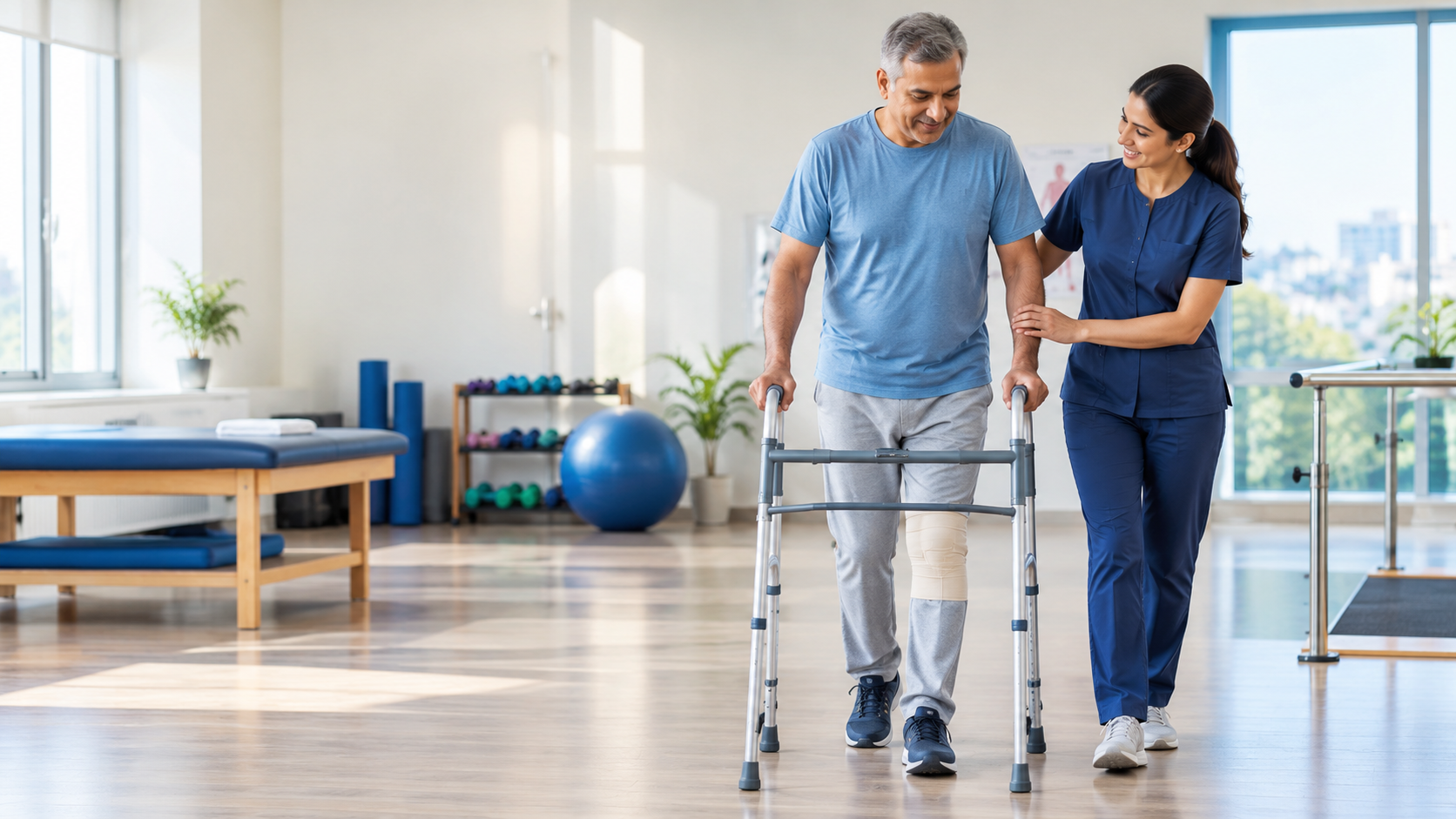
Knee replacement recovery happens in stages rather than on one fixed schedule. Many people become more independent with walking and everyday activities during the first several weeks, while strength, flexibility and confidence can continue improving for months. Your age, health, activity level, the type of surgery and rehabilitation plan can all affect recovery.
Knee Replacement Recovery Timeline
The knee replacement recovery time is different for every patient. Instead of treating a calendar as a promise, it is more useful to think about recovery as a series of functional milestones: controlling pain, moving safely, improving knee motion, building strength and gradually returning to normal activities.
| Stage | What recovery may focus on |
|---|---|
| First 1–2 days | Safe transfers, assisted walking, pain control, wound care and beginning prescribed exercises. |
| Weeks 1–2 | Increasing walking distance, managing swelling, protecting the incision and working on knee movement. |
| Weeks 3–6 | Building strength and independence, progressing from walking aids when appropriate and returning gradually to routine activities. |
| After 6 weeks | Continuing strength, mobility and endurance work. Some activities may return while others still require medical clearance. |
| Following months | Fine-tuning strength, balance, flexibility and confidence. Some people continue to improve for many months. |
Major medical centers note that full recovery can take substantially longer than the first few weeks, even though patients may resume selected activities much earlier. Cleveland Clinic, for example, notes that full recovery can take up to a year, while many usual activities may resume gradually earlier in the process. Cleveland Clinic’s patient guide also emphasizes that age, health and pre-surgery activity level affect recovery.
What Happens After Knee Replacement Surgery?
In the early period after knee replacement surgery, the priorities are safe movement, pain management, protection of the surgical wound and prevention of complications. Depending on the patient’s condition and the hospital’s protocol, some people can go home on the day of surgery while others stay longer.
Early movement is commonly encouraged. A physiotherapist or clinical team may help you stand, transfer from a bed or chair, and begin walking with an appropriate aid. Medication, exercises and other measures are individualized by the treating team.
Weeks 1 to 6: Building Independence
The first several weeks are often when patients notice meaningful changes in their ability to move around the home. The aim is not to win a race; it is to make steady progress without repeatedly aggravating the knee.
Weeks 1–2
- Use the walking aid recommended by your clinical team.
- Perform your prescribed exercises consistently rather than adding strenuous exercises on your own.
- Follow instructions for wound and dressing care.
- Balance activity with rest and follow the team’s advice about swelling control.
Weeks 3–6
As strength and confidence improve, some patients can reduce their reliance on walking aids. The exact timing depends on balance, muscle control, knee motion and the surgeon’s assessment. A rehabilitation plan may continue to emphasize walking, range of motion and progressive strengthening.
The American Academy of Orthopaedic Surgeons notes that recovery after joint replacement includes watching for infection and blood-clot symptoms and following the treating team’s instructions about activity and rehabilitation.
What Happens After the First Six Weeks?
Recovery does not automatically end at six weeks. Some people feel substantially better by this point, but the knee may still feel stiff or weak and endurance may need more time to develop. Returning to higher levels of activity should be based on function and medical advice rather than a fixed deadline.
Mayo Clinic explains that patients are commonly encouraged to move soon after surgery and may continue physical therapy after leaving the hospital. It also recommends discussing long-term activity choices with the healthcare team; lower-impact activities are generally preferred after recovery.
When Can You Walk Normally After Knee Replacement?
Walking usually begins with assistance and becomes more independent as strength, balance and confidence improve. There is no reliable “normal walking” date for every patient. Some people progress quickly, while others need a longer period with a walker, crutches or cane.
Do not stop using a walking aid simply because a certain number of days has passed. If your gait is unsafe or you are leaning heavily on the aid, ask your rehabilitation team whether you are ready to progress.
Exercise and Physiotherapy After Knee Replacement
Rehabilitation is an important part of knee replacement surgery recovery time because the operation addresses the damaged joint, while recovery also requires the muscles and surrounding tissues to regain strength and coordination.
Your programme may include gentle range-of-motion work, walking practice and progressive strengthening. The right exercises and their frequency should be prescribed or reviewed by your surgeon or physiotherapist.
For general patient education, the AAOS emphasizes that prescribed physical therapy exercises are part of recovery and that patients should discuss when to return to more demanding sports and activities with their doctor.
Pain and Swelling During Recovery
Pain and swelling are common after surgery and generally change as healing progresses. A temporary increase in discomfort can occur when activity increases, but severe or steadily worsening symptoms should not simply be ignored.
Follow your clinician’s instructions for pain medicines. Do not change doses or combine medicines unless your healthcare professional has told you that it is safe. Depending on your plan, elevation, cold therapy and activity modification may also be recommended.
Driving, Work and Everyday Activities
Returning to everyday life depends on more than the number of days since surgery. Driving, for example, requires adequate strength, reaction time, mobility and medication safety. Your treating team should confirm when driving is appropriate.
Office work may be possible sooner than physically demanding work, but the timing varies. Household activities should also be increased gradually. Preparing your home before surgery can make the early period easier; Mayo Clinic suggests practical measures such as reducing trip hazards and arranging stable seating and bathroom support.
How to Make Recovery Safer and More Comfortable
- Follow the rehabilitation plan. Consistency matters more than doing excessive exercise.
- Progress activity gradually. More activity is not always better if it causes a large increase in pain or swelling.
- Protect the surgical wound. Follow your surgeon’s specific wound-care instructions.
- Keep follow-up appointments. These visits allow your team to assess healing, knee movement and progress.
- Make your home safer. Remove loose rugs and clutter, use secure handrails and arrange help with demanding household tasks.
- Ask before changing your activity. Particularly before driving, travelling, returning to work or restarting sport.
Warning Signs: When Should You Contact Your Doctor?
Contact your surgical team promptly if you develop concerning symptoms such as increasing wound redness, drainage, persistent fever, worsening pain, or significant calf or leg swelling or pain. These symptoms can have different causes and need clinical assessment.
Chest pain or severe difficulty breathing can be an emergency. Seek urgent medical attention rather than waiting for a routine appointment.
Recovery Time for Joint Replacement Surgeries: Why It Varies
Recovery time for joint replacement surgeries is not identical from one patient to another. The joint being replaced, surgical approach, general health, muscle strength before surgery, age, rehabilitation, home support and other medical factors can all influence progress.
That is why a useful recovery guide should give ranges and milestones rather than promise an exact result on an exact date.
Related Knee Replacement Information
If you are researching surgery or rehabilitation, you can also read:
- Knee Replacement Surgery — an overview of the procedure and what patients should discuss before surgery.
- Bilateral Knee Replacement — information for patients considering replacement of both knees.
- Advantages and Disadvantages of Robotic Knee Replacement — considerations around robotic-assisted knee replacement.
- Patient Testimonials — patient experiences published on the website.
- SG Clinic — clinic information and consultation details.
Have questions about your recovery?
Recovery should be planned around your operation, health and progress. For a personalized assessment, discuss your symptoms and recovery milestones with your orthopaedic surgeon.
Visit Dr. Sanjay Gupta’s website to learn more about knee and joint replacement care.
Frequently Asked Questions
- How long does knee replacement recovery take?
- Recovery varies. Many patients make substantial progress during the first 6 to 12 weeks, while strength, flexibility and confidence may continue improving for many months.
- When can I walk after knee replacement surgery?
- Many patients are encouraged to stand and walk with assistance soon after surgery. The walking aid and progression should be determined by the treating team.
- Is swelling normal after knee replacement?
- Yes, swelling is common during recovery and generally settles gradually. Increasing or unusual swelling should be discussed with your medical team.
- When can I drive after knee replacement?
- There is no universal date. Driving depends on the operated side, mobility, reaction time, medication use and your surgeon’s clearance.
- What exercises are recommended after knee replacement?
- Exercises are individualized. Early rehabilitation commonly focuses on safe walking, knee movement and gradual strengthening under professional guidance.
- When should I contact my doctor?
- Contact your surgical team for concerning wound changes, persistent fever, worsening pain, significant calf or leg symptoms, or other unexpected problems. Severe breathing difficulty or chest pain requires urgent medical attention.

